Traditions are not a single script
There is no universal Moroccan wedding protocol. Practices vary by region, community, family and personal preference.
For an international couple, thoughtful cultural inclusion starts with learning what a ritual means rather than choosing it only for its visual effect.
- Ask about the meaning and setting of each proposal.
- Avoid presenting local customs as universal rules.
- Let families choose which elements suit them.
Caftans, henna and preparation
Caftans and henna celebrations may be important in some wedding contexts. A neggafa, when chosen, may coordinate far more than clothing alone.
Allow preparation, changing and touch-up time in the day’s schedule.
- Plan changing spaces and realistic timings.
- Check henna hygiene and ingredients.
- Clarify scope and cultural appropriateness.
Live music and performers
Moroccan music, including gnawa traditions, can be meaningful when chosen with an understanding of the performers and the event context.
Venue sound restrictions and supplier rules still apply: some properties allow a DJ but not outside musicians.
- Obtain artists’ technical needs.
- Get written venue approval.
- Check amplification and finish times.
Food, hospitality and respectful storytelling
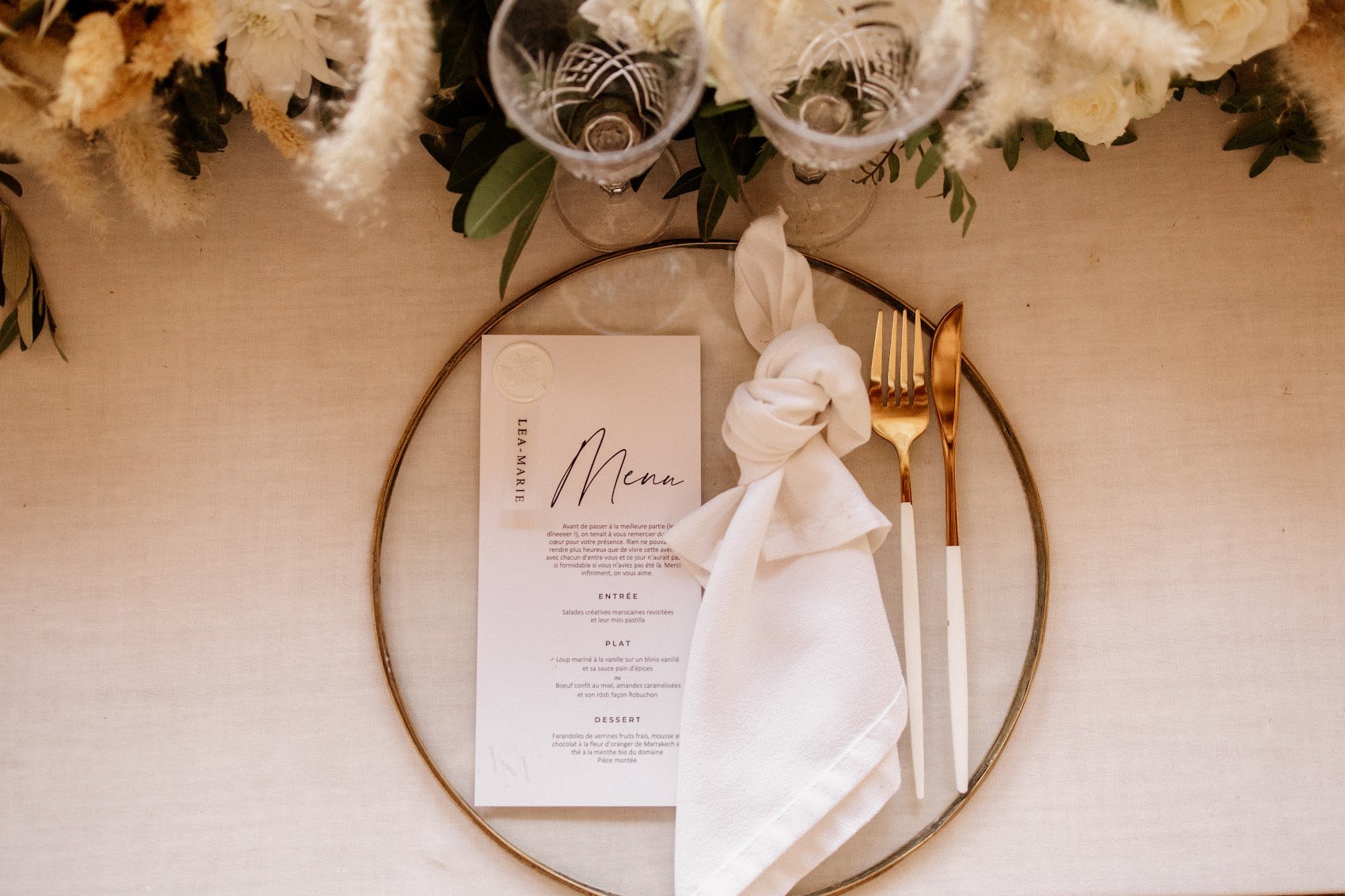
Tea, pastries and local cuisine can frame memorable guest moments. Specific menus, allergy handling and service plans matter more than vague claims of authenticity.
A multicultural celebration should honour the people who make it happen, rather than reducing Marrakech to decorative clichés.
- Request exact menus and ingredients.
- Offer dietary alternatives.
- Credit participating artisans and suppliers.